A more closely connected circular economy. Making things.
made by pigeons makes lamps out of discarded plastics, with no new plastics mixed in. A closer circular economy means a more direct line between waste and finished product. Every lamp is made from waste to finished object, currently by one person, in Muizenberg.
GET YOUR LAMP →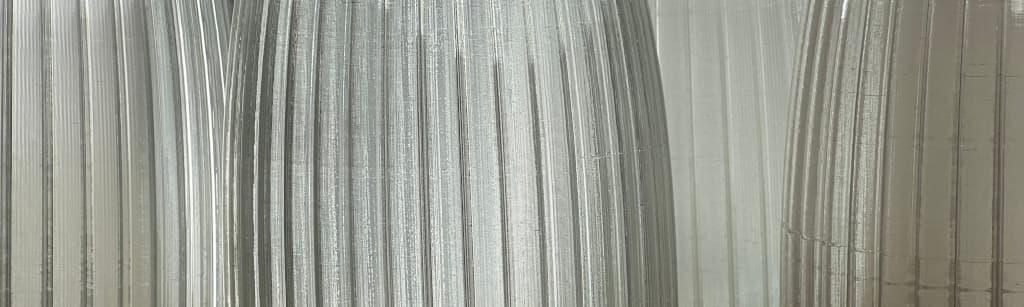
How the plastic ends up in your lamp.
TWO LINES — SELECT A PROCESS
The original line. Lamps made entirely from single-use PET bottles, no new plastic mixed in, with the whole chain from waste to finished lamp, run by one person in Muizenberg.
- SOURCE
- Single-use PET bottles · ad-hoc supply
- POLYMER
- PET, no new plastic mixed in
- MACHINES
- Bottle cutting · jig Custom pull-truder · dry-box
- YIELD
- 30–50 g a bottle, by size
- STATUS
- Running
Collect & prep.
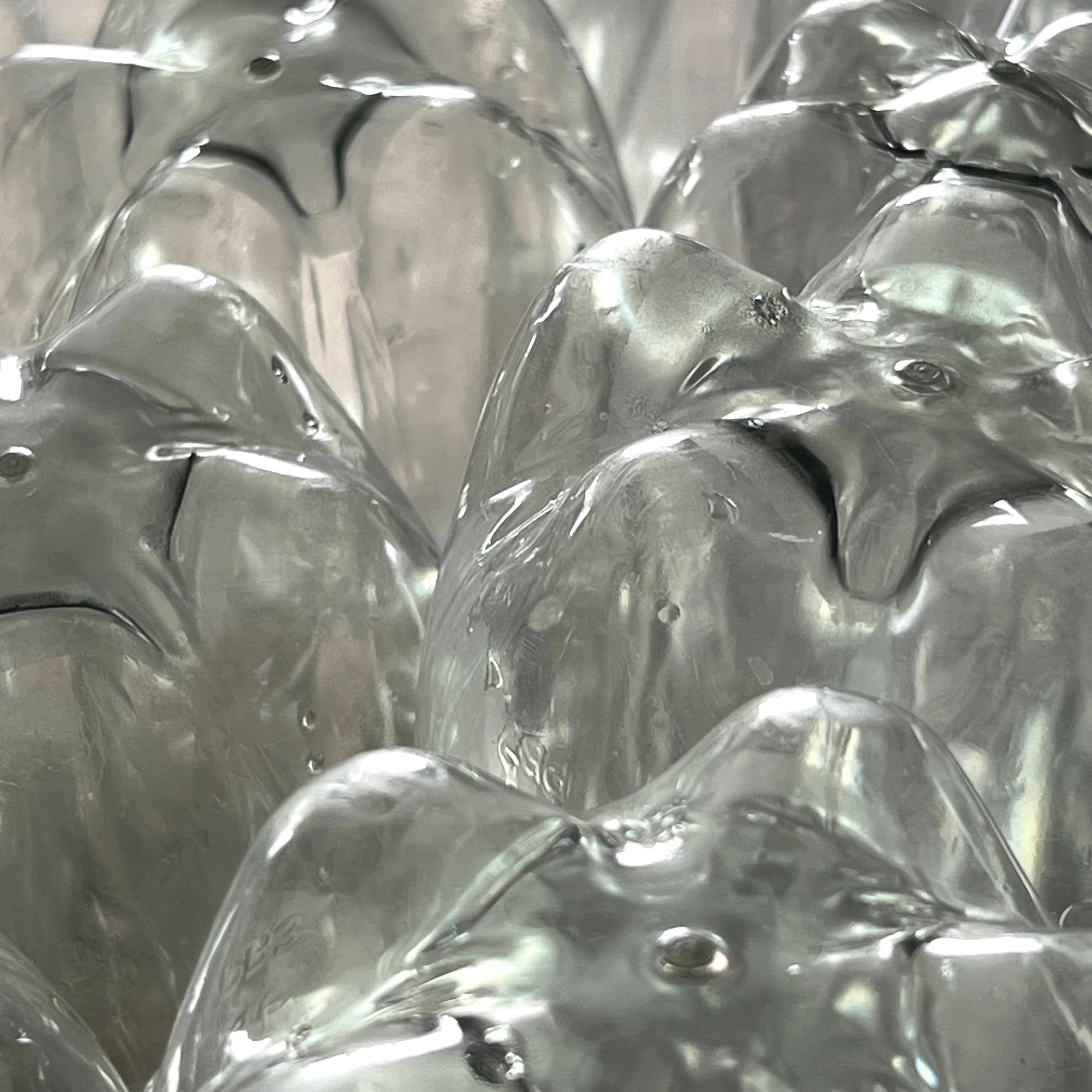
Gathering bottles is, sadly, almost too easy. Supply is ad-hoc — friends, family, neighbours, or found in the street and on the beach. If you have a good source, let me know here.
Bottles need a fairly consistent wall thickness as an uneven wall means an uneven filament. Minimal branding and adhesive too, since that's difficult to remove and needs solvents. Any ridges are smoothed out by pressurising the bottle and rotating it over a heat source for a short time.
Cut to strip.
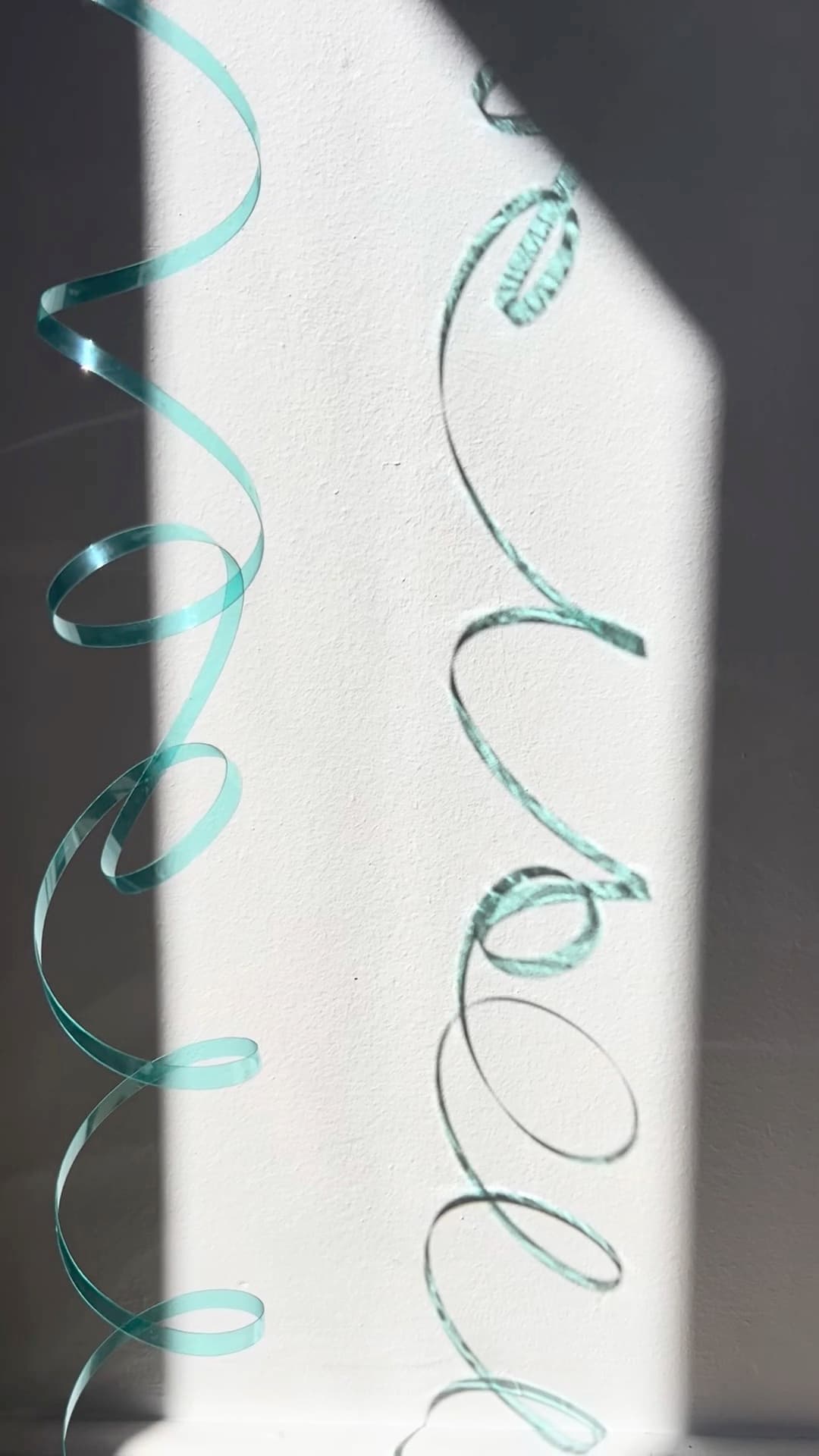
The bottle is cut into a long helical strip of roughly 5–10 mm wide depending on the wall thickness. It's almost like peeling an orange, very precisely.
Pull-trude.
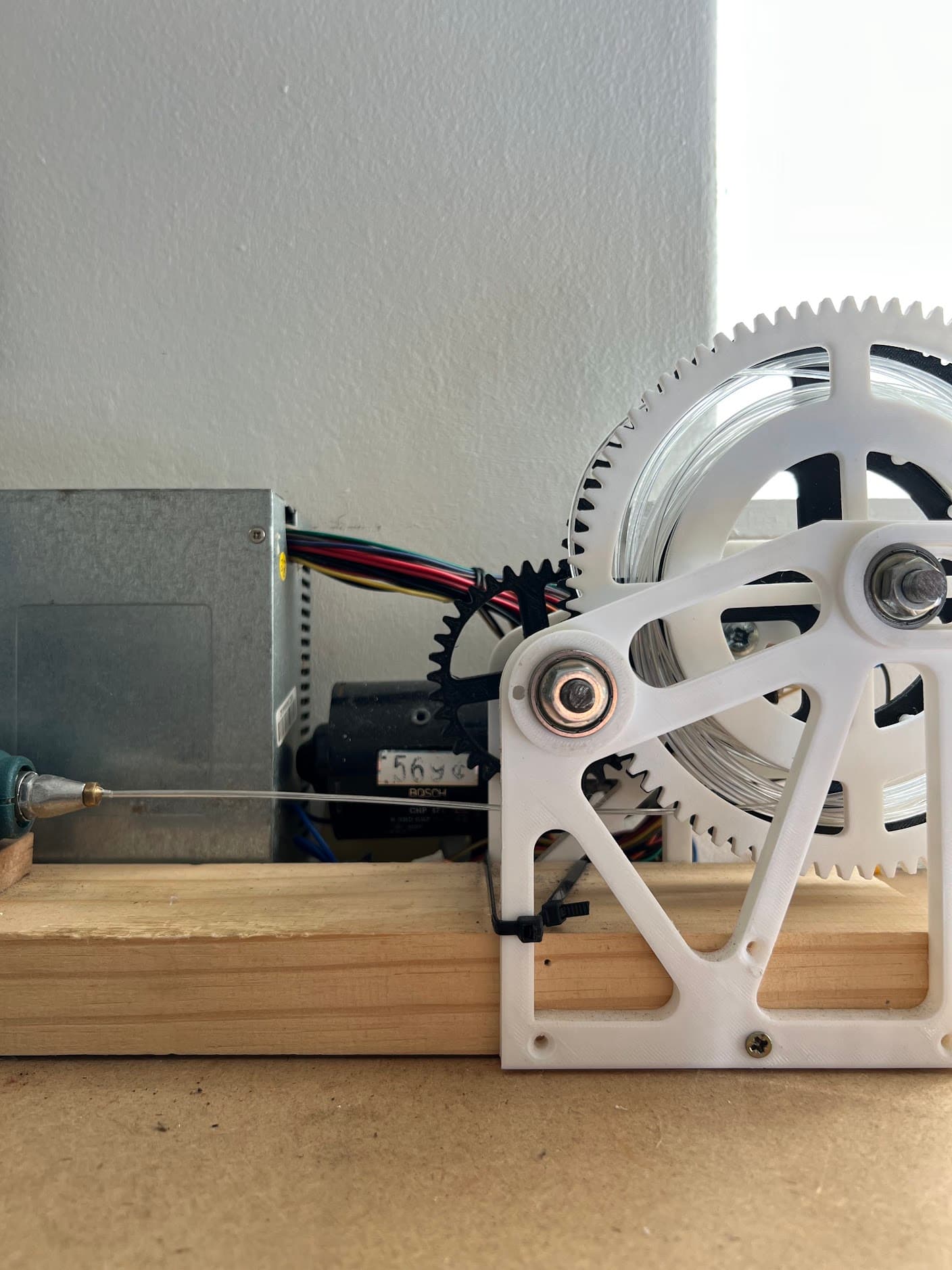
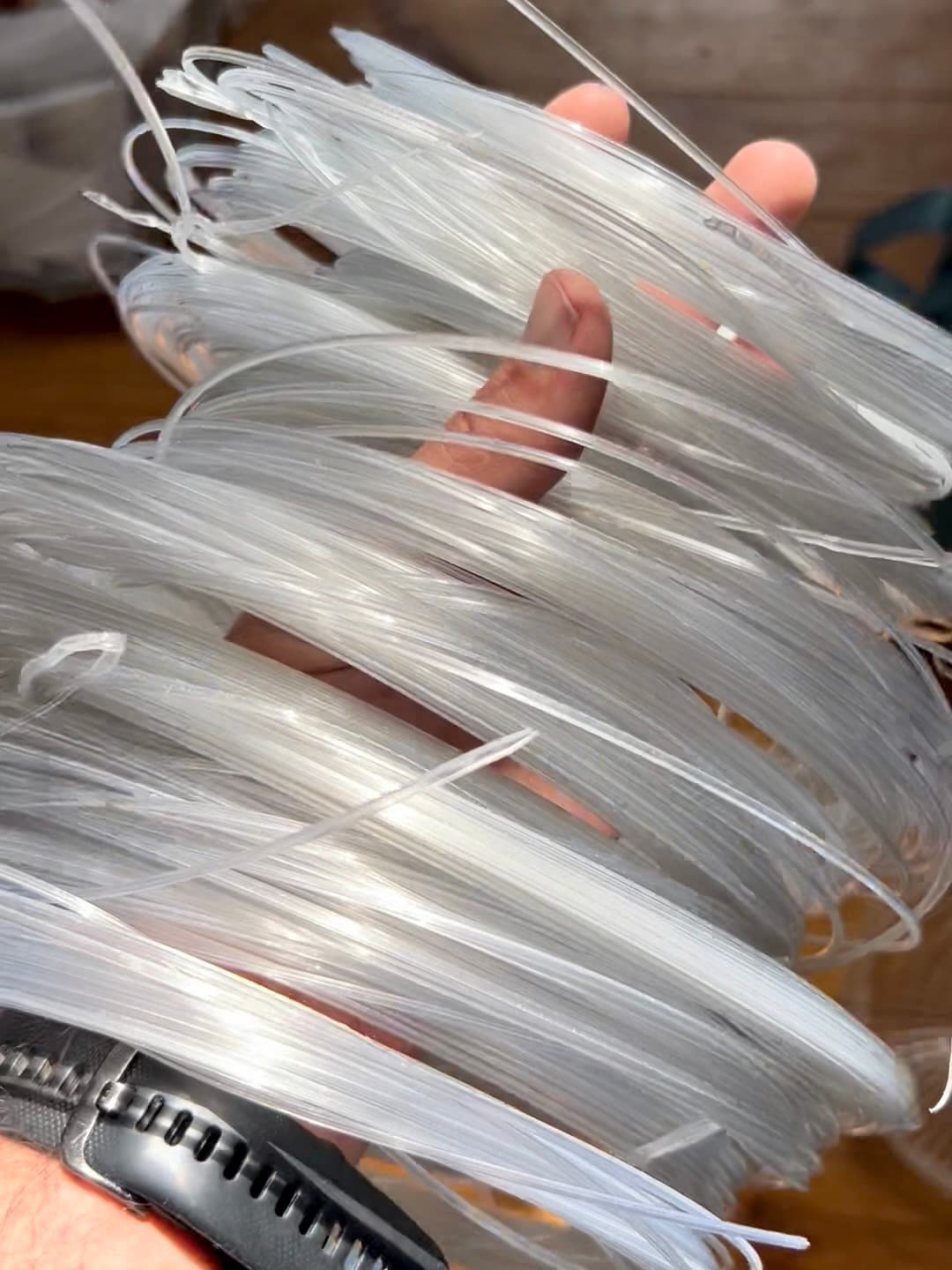
The strip is loaded into a custom-built pull-truder made from scrappy components anyone can find: An old PC power supply, a hot glue gun and a car windshield wiper motor.
Dry, join & print.
PET is hygroscopic and each bottle only yields 30–50 g, so the short, wet pieces are dried and joined into one continuous strand, then spooled and kept in a dry-box.
Finally the lamp is printed and can be on its way to your shelf.
Things to improve.
As with anything, there are things that can be better. This is a living revision log showing what the failings are, and how and where they get overcome.
If you see anything that can be done better, please let me know here.
A bit about me.
Hello. I'm Keelan.
I spent my childhood hammering scraps together in the garage, which led me to study mechanical engineering. Reality kicked in and bills had to be paid, so I started out in software. But after a few years of office work I had an urge to do something with my hands.
So I bought a 3D printer and, instead of doing something reasonable, decided to print exclusively out of finicky recycled plastics. Smort.